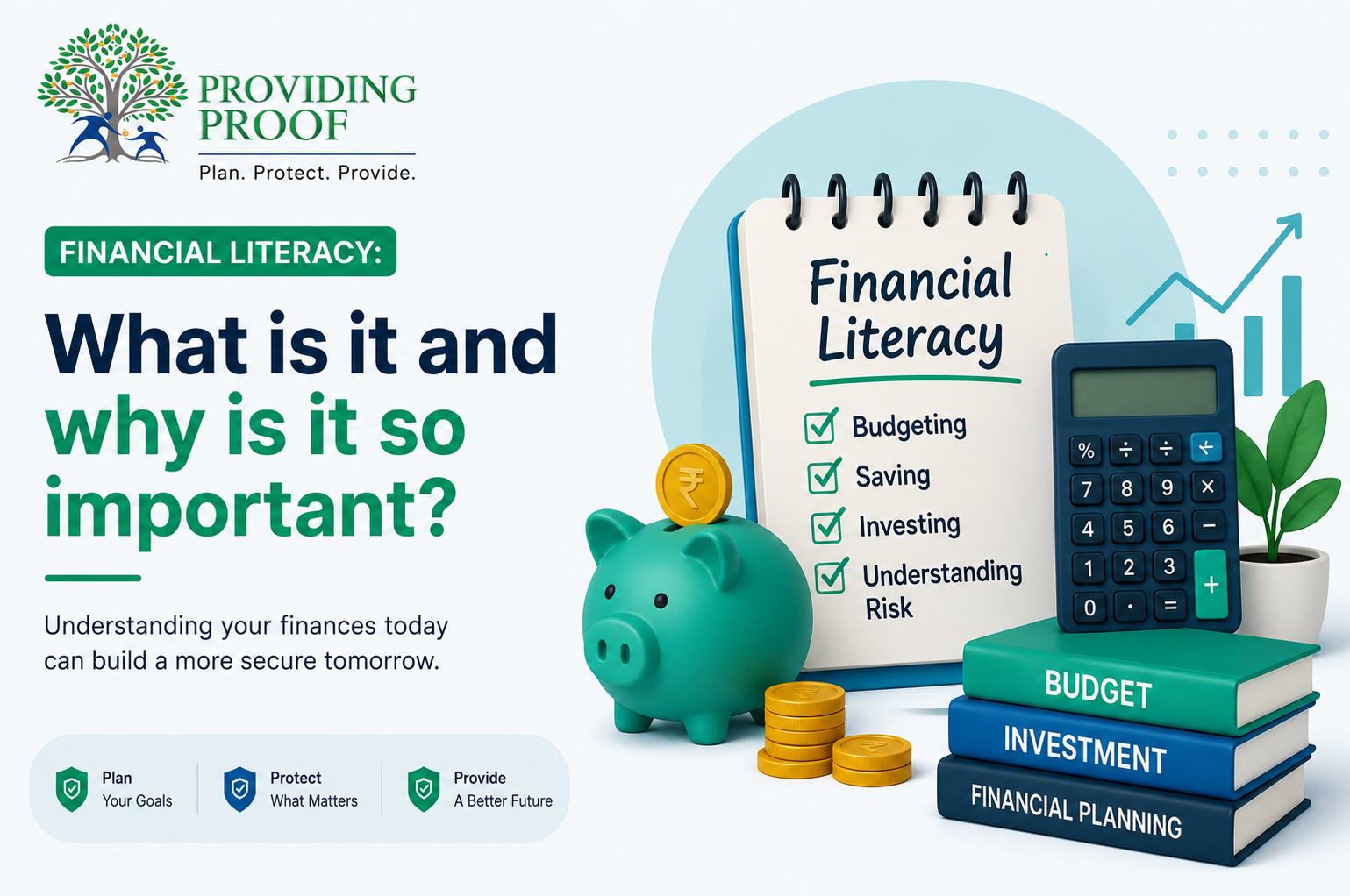
Money touches every part of our lives. From the moment we pick up our first paycheck to the day we retire, every financial decision we make shapes our future. Yet millions of people move through life without ever truly understanding how money works, what their options are, or how to avoid the traps that keep so many families stuck in financial stress. That is where financial literacy comes in, and at Providing Proof, we believe it is one of the most powerful tools any person, young or old, can ever develop.
This guide is designed to walk you through everything you need to know about financial literacy, from its definition to its real-world impact, and from beginner-level concepts to the practical financial literacy tips that can transform how you handle your money every single day.
What Is Financial Literacy and Why Does It Matter More Than Ever
When people ask “what is financial literacy?” the simplest answer is this: it is the ability to understand and effectively apply financial skills to your everyday life. But the full picture goes much deeper than that.
Financial literacy is not just about knowing what a savings account is. It is about understanding how interest compounds on your debt, why your credit score affects the mortgage rate you are offered, how to tell the difference between a need and a want when building a budget, and how to make your money grow over time through smart investing. It is the collection of knowledge, habits, and skills that empowers you to make confident, informed decisions about your money rather than guessing, reacting, or hoping for the best.
What does financial literacy mean in a real-world sense? It means a parent who understands how to build an emergency fund before disaster strikes. It means a young adult who knows how to read the terms of a student loan before signing. It means a retiree who understands how to draw down their savings without outliving their income. These are not rare, elite skills. They are the kind of knowledge that every person deserves access to, and they are exactly what financial education is meant to provide.
The reason this matters more than ever is simple. The financial world has grown far more complex over the last few decades. Pensions that once guaranteed retirement income have largely disappeared. Credit products have multiplied. Investment options are more varied and confusing than at any point in history. Digital banking, cryptocurrency, and online lending have introduced entirely new landscapes to navigate. At the same time, predatory financial products are deliberately designed to confuse consumers. Without financial literacy education, people are left vulnerable in a system that does not wait for them to catch up.
The Real Cost of Not Being Financially Literate
Before diving into the details of how to build financial literacy, it is worth pausing to understand what the absence of it actually costs. The numbers are sobering.
Research conducted by the National Financial Educators Council found that a lack of financial knowledge cost the average American nearly a thousand dollars in a single year. Across an entire lifetime, those losses compound dramatically. People who do not understand how credit card interest works often carry balances for years, paying far more for purchases than they ever intended. People who do not understand investment basics often leave employer-matched retirement contributions on the table, effectively walking away from free money. People who never learn to budget often find themselves living paycheck to paycheck, unable to absorb even a minor financial shock like a car repair or a medical co-pay.
The personal financial literacy gap is not just an individual problem, either. It has broader societal consequences. Communities with lower financial literacy tend to have higher rates of debt, lower rates of homeownership, and weaker economic mobility. Children who grow up in households where money is never discussed or is managed poorly are far more likely to repeat the same patterns in their adult lives, not because they are incapable, but because they were never taught any other way.
This is why Providing Proof exists. We know that millions of young people face limited opportunities not because of a lack of potential, but because of a lack of access to the financial knowledge that builds the foundation for long-term stability. Closing that gap is not just important. It is urgent.
Understanding the Core Pillars of Personal Financial Literacy
Financial literacy is not a single skill. It is a collection of interconnected competencies, each one building on the others. Understanding the core pillars of personal financial literacy helps you see where you are strong and where there is room to grow.
The first pillar is budgeting. A budget is simply a plan for your money. It tells you how much is coming in, where it is going, and whether you are spending more than you earn. Without a budget, most people have no idea where their money actually goes. They know approximately what they earn, but they are often shocked to discover how much disappears on subscriptions, eating out, impulse purchases, and other spending they never consciously chose. A solid budget puts you in the driver’s seat, giving you the visibility to make intentional choices about your money rather than wondering at the end of the month where it all went.
The second pillar is saving. Saving is not just about putting money aside. It is about building multiple layers of financial security. The first layer is an emergency fund, a cash reserve that covers three to six months of essential living expenses. This cushion is what stands between you and disaster when something unexpected happens. The second layer is goal-based saving, setting money aside for specific future needs like a down payment on a home, a vehicle, or your children’s education. The third layer is retirement saving, which requires understanding tax-advantaged accounts and how investing works over the long term.
The third pillar is debt management. Debt is not inherently bad. A mortgage that helps you build equity, a student loan that leads to higher earning potential, or a small business loan that funds your growth can all be smart uses of borrowed money. But debt becomes destructive when you do not understand its terms, when high interest rates eat away at your income, or when you borrow more than you can realistically repay. Financial literacy gives you the tools to evaluate debt clearly, understand its true cost, and develop a strategy for paying it off efficiently.
The fourth pillar is investing. This is where many people disengage because investing feels complicated or risky. In reality, the basics of investing are accessible to anyone willing to spend a little time learning. The core concept is simple: money invested wisely tends to grow over time through a mechanism called compound interest, which allows your returns to generate their own returns. Understanding how stocks, bonds, mutual funds, and retirement accounts like 401(k)s and IRAs work gives you the power to grow wealth over time rather than just saving it.
The fifth pillar is understanding credit. Your credit score is a three-digit number that affects your ability to rent an apartment, buy a car, purchase a home, and sometimes even get a job. Understanding how credit scores are calculated, what damages them, and how to build or repair them is a foundational financial skill that has far-reaching consequences.
The sixth pillar is insurance. Insurance is one of the most overlooked aspects of personal financial literacy, yet it is one of the most important. A single unexpected health crisis, accident, or disaster can financially devastate an individual or family that is not properly insured. Understanding what types of insurance you need, how much coverage is appropriate, and how to evaluate policies is essential to protecting everything you work to build.
Why Is Financial Literacy Important for Young People Specifically
The question of why financial literacy is important takes on extra urgency when we consider young people. The habits, knowledge, and attitudes toward money that a person develops in their teens and early twenties tend to follow them for life. Financial decisions made early, from taking out student loans to opening the first credit card to starting or not starting retirement savings, have consequences that compound over decades.
Yet the financial education that young people receive is shockingly thin in most school systems. Many students graduate high school having studied calculus, classical literature, and chemistry but having never learned how to read a pay stub, understand a lease agreement, or calculate the total cost of a loan. The result is a generation of young adults entering the workforce and signing legally binding financial agreements they do not fully understand.
Financial literacy for beginners, particularly young beginners, should start with the absolute basics. What is a checking account and how does it work? What is a debit card versus a credit card? What does it mean when something has an interest rate? How do taxes work? These foundational questions matter enormously, and answering them early creates a platform for building more sophisticated financial knowledge over time.
At Providing Proof, this is the work we are most passionate about. We believe that every young person, regardless of their zip code or their family’s income level, deserves access to high-quality financial literacy education. When young people understand money, they make better decisions. When they make better decisions, they build better lives. And when they build better lives, the ripple effects extend to their families, their communities, and the generations that come after them.
Financial Literacy for Adults Starting from Scratch
Financial literacy is not just a young person’s journey. Millions of adults reach middle age without ever having received meaningful financial education, and many of them feel too embarrassed to admit it or too overwhelmed to know where to begin. If that describes you, know this: it is never too late to start, and starting now will always be better than not starting at all.
Financial literacy for adults often requires a slightly different approach than financial education for young people. Adults typically come to the subject with existing debts, existing financial habits, and existing pressures that young people do not yet face. The approach needs to be practical, actionable, and grounded in real-world situations rather than theoretical frameworks.
For adults starting from scratch, the first step is almost always a financial audit. This means taking an honest look at where you stand right now. How much do you earn? How much do you spend? What do you owe? What do you own? What does your credit look like? Getting clear on these four questions creates the foundation from which every other improvement can be built.
The second step for adults is identifying the one or two areas of financial literacy that will have the greatest immediate impact on their situation. For some people, that is learning to budget so they can stop living paycheck to paycheck. For others, it is understanding their debt and creating a payoff plan. For still others, it is learning the basics of investing so they can start actually growing the money they have worked hard to earn.
The good news is that there has never been more access to quality financial literacy resources for adults. Online financial education platforms, community workshops, nonprofit programs, and digital tools have made it possible to learn at your own pace, for free or very low cost, from the privacy of your own home.
The Benefits of Financial Literacy That Go Beyond Money
When we talk about the benefits of financial literacy, the conversation typically starts with money, and for good reason. Financially literate people save more, carry less debt, make better investment decisions, and build more wealth over their lifetimes than those without financial education. But the benefits do not stop at the bank account.
Financial literacy reduces stress. One of the leading sources of anxiety for adults in the modern world is financial worry. Not knowing if there is enough money to cover an unexpected expense, feeling overwhelmed by debt, or dreading retirement because there is nothing saved are forms of chronic stress that take a real toll on mental and physical health. When people understand their finances and have a plan, that anxiety is replaced by a sense of control. You may not be wealthy, but you know where you stand, you know what you are working toward, and you have a roadmap to get there.
Financial literacy strengthens relationships. Money conflict is one of the most common causes of tension and breakdown in marriages and partnerships. When both partners have a shared language and understanding of financial concepts, they are better equipped to have productive conversations about money, make joint decisions, and align on long-term goals. Financial literacy does not guarantee that couples will agree on everything, but it dramatically improves the quality of the conversations they are able to have.
Financial literacy empowers civic participation. People who understand how money works are better equipped to evaluate economic policies, understand their tax obligations, make sense of government budgets, and engage meaningfully in conversations about the financial systems that shape their communities. Financial knowledge is not just a personal asset. It is a form of civic literacy.
Financial literacy creates intergenerational change. When parents understand money, they pass that knowledge to their children, either through explicit teaching or through the everyday modeling of financially responsible behavior. This is how the cycle of financial stress is broken, not in one generation alone, but across generations.
Practical Financial Literacy Tips You Can Start Using Today
Understanding why financial literacy matters is important, but the real change happens when you put knowledge into action. Here are some of the most effective financial literacy tips for anyone looking to take concrete steps forward.
Start by tracking every dollar you spend for at least one month. Not an approximation, but every single purchase. Use an app, a spreadsheet, or even a notebook. Most people are genuinely surprised by what they find. This exercise alone often creates immediate motivation to make changes.
Build your emergency fund before you do anything else with extra money. Even a small cushion of five hundred to a thousand dollars is enough to prevent a minor crisis from becoming a major debt spiral. Make this your first financial priority.
Learn the true cost of debt. Take every debt you carry and calculate how much interest you are paying over the full life of that loan or balance. Seeing that number clearly, rather than just seeing your monthly payment, changes how people think about debt and motivates faster payoff strategies.
Automate your savings. The single most effective financial behavior change most people can make is to set up automatic transfers from their checking account to their savings account on payday. When saving happens automatically, you never have to rely on willpower, and the money is gone before you have a chance to spend it.
Take advantage of every employer match available to you. If your employer offers a matching contribution to a retirement account, contributing at least enough to capture the full match is the highest-return investment you can make. It is literally free money, and leaving it on the table is one of the costliest financial mistakes working adults make.
Check your credit report at least once a year. You are entitled to free copies of your credit report from each of the three major credit bureaus annually. Reviewing your report helps you catch errors, identify potential fraud, and understand how your credit profile looks to lenders.
Keep learning. Financial literacy is not a destination you reach and then stop. The financial world changes, your life circumstances change, and the knowledge that serves you well at twenty-five will need to grow and evolve as you reach thirty-five, forty-five, and beyond. Make financial education a habit, not a one-time effort.
How Online Financial Education Is Changing the Game
One of the most significant developments in the world of financial literacy over the last decade is the explosion of online financial education. Not long ago, learning about personal finance meant taking an expensive course, hiring a financial advisor, or hoping your employer offered some kind of workshop. Today, high-quality financial education is available to virtually anyone with an internet connection.
Online financial education has broken down barriers of geography, cost, and schedule. A single mother working two jobs can learn about budgeting at midnight after her kids are in bed. A teenager in a rural community with no access to a financial advisor can learn how compound interest works from a well-produced video. A recent immigrant navigating the American financial system for the first time can find resources in their language that explain how credit works and why it matters.
The rise of online financial education also means that the quality and variety of available resources has never been greater. From structured online courses and interactive tools to podcasts, YouTube channels, and community forums where people learn from each other’s experiences, the landscape is rich. The challenge is not access, it is curation, knowing which resources are trustworthy, comprehensive, and aligned with your actual situation.
This is part of what makes mission-driven organizations like Providing Proof so valuable in the online financial education ecosystem. We do not just point people toward any resource. We prioritize accuracy, relevance, and accessibility, particularly for the young people and underserved communities we serve.
The Connection Between Financial Literacy Education and Economic Equity
It would be impossible to talk honestly about the importance of financial literacy without addressing the reality that access to financial education has never been equally distributed. The communities with the greatest need for financial literacy education have historically been the ones with the least access to it.
Low-income communities, communities of color, immigrant communities, and rural communities have long been underserved by formal financial education systems. Schools in these communities are more likely to lack dedicated personal finance curricula. Residents are more likely to be targeted by predatory financial products like payday loans, check cashing services, and rent-to-own schemes that strip wealth rather than build it. Banks may be less present, financial advisors less accessible, and role models for financial success harder to find.
This is not a coincidence, and addressing it requires more than making financial literacy resources available online. It requires actively meeting communities where they are, building trust, speaking in accessible language, and connecting financial education to the real circumstances and real goals of the people being served.
The importance of financial literacy education grows even sharper when viewed through this lens. Improving financial literacy in underserved communities is not just about individual outcomes. It is about closing wealth gaps that have persisted across generations, expanding economic opportunity, and building a more equitable society.
Building a Personal Financial Literacy Action Plan
Reading about financial literacy and actually improving your financial life are two different things. The bridge between them is a personal action plan, a clear, written commitment to the specific steps you are going to take and when you are going to take them.
A strong financial literacy action plan starts with an honest assessment of where you are today. Write down your income, your monthly expenses, your total debts, and your savings. Do not judge the numbers. Just know them.
Next, identify your top three financial goals. Be specific. Not “save more money” but “save six hundred dollars per month until I have a three-month emergency fund by December.” Not “pay off debt” but “pay an extra two hundred dollars per month toward my credit card with the highest interest rate.” Specificity turns good intentions into achievable targets.
Then build a budget that reflects those goals. Allocate your income with purpose, making sure your essential expenses are covered, your savings goals are funded, and your debt payoff plan is built in before any discretionary spending happens.
Identify the two or three areas of financial literacy where you most need to grow and commit to learning about them consistently. Schedule thirty minutes a week for financial education, whether that is reading an article, listening to a podcast, or working through an online course. Treat it like any other appointment you would not cancel.
Finally, find accountability. Share your goals with a trusted friend, join a community of people working toward similar financial goals, or connect with a nonprofit financial counselor who can offer guidance. Financial literacy is easier to build and maintain when you are not doing it alone.
Why Choose Providing Proof for Your Financial Literacy Journey
At Providing Proof, we are not just another source of financial information. We are a mission-driven organization rooted in the belief that financial knowledge is a form of preventative care. Our name itself is an acronym: Preventative Resources Often Overlooked about Finance. Everything we do is guided by the conviction that equipping people, especially young people who have been overlooked by traditional systems, with real financial knowledge changes the trajectory of their lives. We bring together curated financial literacy education, community connection, and accessible programming designed to meet people where they are and take them where they want to go. We understand that financial literacy is not one-size-fits-all, which is why our approach is personal, practical, and built on the lived realities of the communities we serve. When you learn with Providing Proof, you are not just gaining information. You are gaining a community that is invested in your financial growth and your long-term success.
Frequently Asked Questions About Financial Literacy
Q. What is financial literacy in simple terms?
Financial literacy is the ability to understand and use financial knowledge to make informed decisions about money. It includes knowing how to budget, save, invest, manage debt, use credit wisely, and plan for the future. It is not about being an expert. It is about having enough knowledge to navigate the financial decisions that affect your everyday life with confidence.
Q. What does financial literacy mean for someone who has never learned about money?
For someone who is starting from zero, financial literacy means beginning with the basics: understanding how a bank account works, what a budget is, how interest affects your debt, and why saving matters. It is a journey, not a test, and every step forward makes a meaningful difference. There is no shame in starting late. The only mistake is not starting at all.
Q. Why is financial literacy important for young people?
Financial literacy is especially important for young people because the financial habits and decisions made early in life have compounding effects over time. A young person who learns to budget, save, and avoid high-interest debt in their twenties will be dramatically better off financially by their forties than someone who spends those years without a financial plan. Early financial education creates a foundation that supports every major life goal, from education to homeownership to retirement.
Q. What are the most important benefits of financial literacy?
The most important benefits of financial literacy include the ability to build and sustain an emergency fund, avoid destructive debt, make smart investment decisions, retire with adequate income, and reduce the chronic stress that comes with financial uncertainty. Beyond personal finance, financial literacy also strengthens relationships, improves civic engagement, and creates the conditions for intergenerational wealth-building.
Q. What are some of the best financial literacy tips for beginners?
For beginners, the most impactful financial literacy tips are tracking your spending to understand where your money actually goes, building a small emergency fund as quickly as possible, learning the true cost of the debt you carry, automating your savings so you never have to rely on willpower, and committing to ongoing financial education through books, articles, and trustworthy online courses. Starting small and staying consistent matters far more than trying to do everything perfectly from the beginning.
Q. How can I improve my financial literacy online?
Online financial education has made it easier than ever to improve your financial knowledge from home, at your own pace, and often for free. You can access articles, video courses, podcasts, and interactive tools covering every aspect of personal finance. The key is to choose sources that are credible, clear, and aligned with your actual situation. Mission-driven organizations, accredited educational institutions, and established nonprofit financial education programs are generally more trustworthy than generic social media financial advice.
Q. Is financial literacy education available for adults who never learned about money?
Absolutely. Financial literacy for adults is widely available and specifically designed for people who are starting their financial education journey later in life. Many nonprofit organizations, community colleges, libraries, and online platforms offer programs tailored to adult learners who want to get their finances on track regardless of where they are starting from. It is never too late to learn, and even small improvements in financial knowledge can produce meaningful changes in financial outcomes.
Q. What is the difference between financial literacy and financial education?
Financial literacy refers to the level of understanding and competence a person has with financial concepts. Financial education is the process through which that understanding is developed. Think of financial literacy as the destination and financial education as the road that gets you there. Both terms are often used interchangeably, but understanding the distinction helps clarify that financial literacy is something you build continuously through ongoing education and practice, not something you acquire once and keep forever.
Q. How does financial literacy connect to economic equality?
Research consistently shows that communities with lower average financial literacy tend to experience higher rates of debt, lower rates of wealth accumulation, and fewer pathways to economic mobility. When financial education is not accessible to everyone, the gaps between wealthy and lower-income communities tend to widen over time. Improving access to financial literacy education, particularly in underserved communities, is one of the most powerful tools available for reducing economic inequality and expanding opportunity.
Q. What topics should a complete financial literacy education cover?
A comprehensive financial literacy education should cover budgeting and cash flow management, savings strategies and emergency fund building, debt management and credit understanding, investing basics and retirement planning, insurance literacy, tax awareness, and consumer protection. It should also cover the behavioral and psychological dimensions of money management, including how emotions, habits, and social pressures influence financial decision-making. The most effective financial literacy education does not just teach knowledge. It builds skills and changes behavior.